
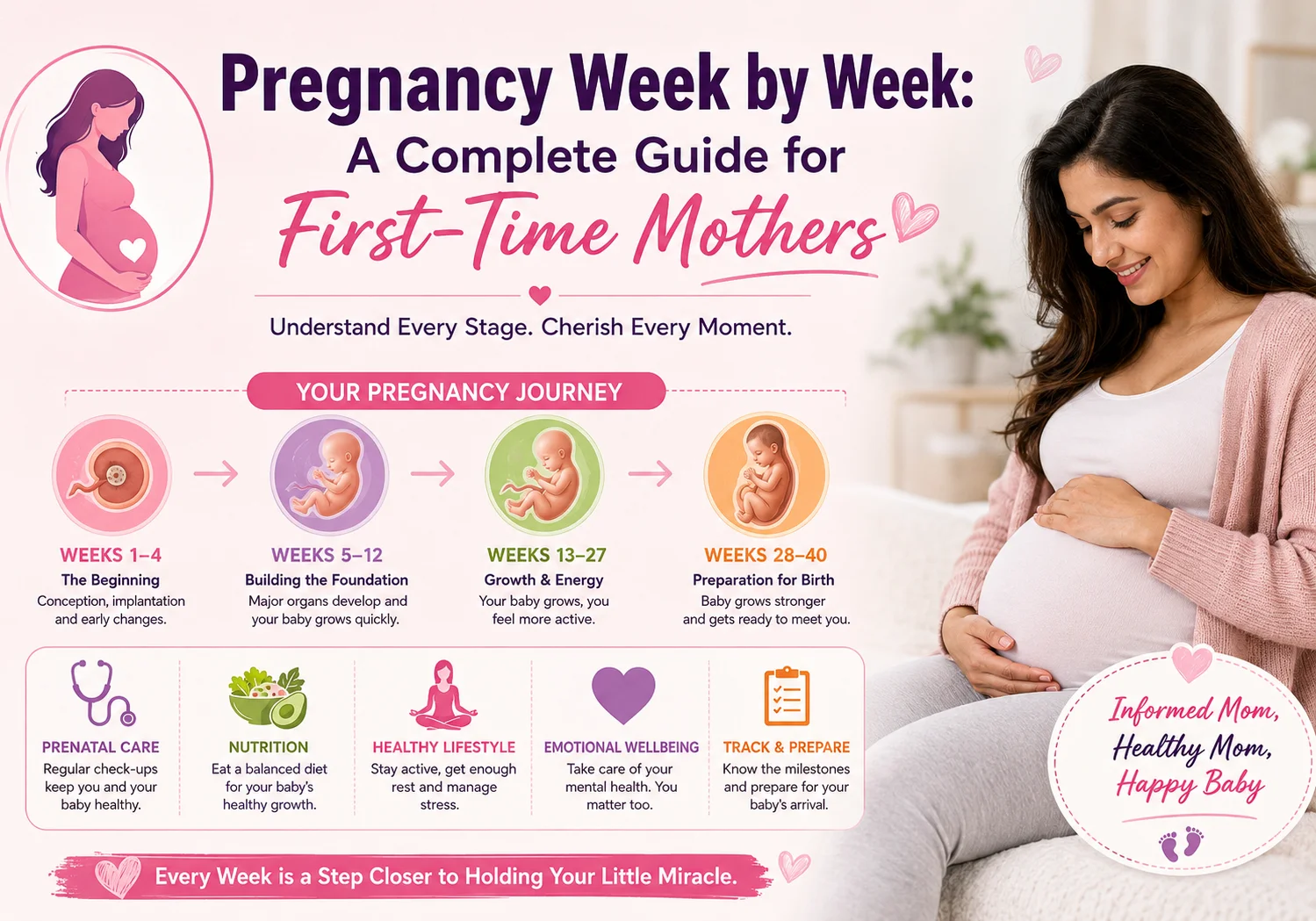
The first pregnancy often comes with excitement, questions, and sometimes uncertainty. You may wonder when symptoms will begin, how your baby is developing, which checkups you need, what foods are appropriate, and whether a particular change is normal.
A Pregnancy Week by Week approach makes this information easier to understand. Instead of thinking about pregnancy as one long nine-month period, you can focus on the changes happening during each stage. As pregnancy progresses, your baby’s development changes rapidly. By around week 8, for example, the embryo has developing arms and legs, while the placenta is preparing to provide nutrients and oxygen. As pregnancy progresses, your baby’s organs, nervous system, bones, muscles, and senses continue developing. At the same time, your body adapts to support the growing baby. Let’s look at the journey simply and practically.
Question Types
First-time mothers commonly have several questions about pregnancy. These questions generally fall into a few important categories:
- Baby development: How big is my baby, and what is developing this week?
- Body changes: What symptoms or physical changes might I experience?
- Prenatal care: When should I see my doctor or midwife?
- Nutrition: What should I eat during pregnancy?
- Lifestyle: Which activities, habits, and routines are pregnancy-friendly?
- Emotional wellbeing: Is it normal to feel anxious, tired, or overwhelmed?
- Warning signs: Which symptoms require prompt medical attention?
Having these questions is completely understandable. Keeping a list of questions for your prenatal appointments can also help you communicate clearly with your healthcare provider.
What Happens During the First 4 Weeks of Pregnancy?
The First 4 Weeks of Pregnancy can feel confusing because pregnancy is usually dated from the first day of your last menstrual period, even though conception generally occurs later. This means that the first couple of weeks in the pregnancy calculation occur before conception.
Week 1 and Week 2
During weeks 1 and 2, your body is preparing for ovulation. Depending on your menstrual cycle, fertilisation may occur around the middle of the cycle. At this stage, there is not yet a developing embryo in the uterus. However, these weeks are still included when healthcare professionals calculate pregnancy duration.
Week 3
Around week 3, fertilisation may occur. The fertilised egg begins dividing as it travels toward the uterus. This is an important beginning, even though you may not notice any physical pregnancy symptoms yet.
Week 4
By week 4, implantation has occurred or is occurring, and early pregnancy hormones begin increasing. The developing embryo is extremely small. The NHS describes it as approximately the size of a poppy seed at this stage. Some women may notice a missed period, tiredness, breast tenderness, mild cramping, or other early symptoms, while others may have no noticeable symptoms. A pregnancy test may detect pregnancy around this time, depending on the test and timing.
Pregnancy Week by Week: Weeks 5 to 12
The first trimester is an important period of early development. Your baby’s basic structures begin forming, while your body undergoes significant hormonal changes.
| Pregnancy Week | Baby Development | Possible Maternal Changes |
| Week 5 | Early nervous system and embryo development begin. | Missed period, tiredness, breast tenderness |
| Week 6 | Early heart and limb development | Nausea, fatigue, increased urination |
| Week 7 | The brain and spinal cord develop rapidly | Nausea, bloating, mood changes |
| Week 8 | Arms, legs, and facial structures continue developing | Breast changes, fatigue |
| Week 9 | Major organs continue developing | Nausea, food preferences, tiredness |
| Week 10 | Rapid growth and recognizable facial development | Bloating, heartburn, fatigue |
| Week 11 | Fingers, toes, and other structures become more developed | Symptoms may begin changing |
| Week 12 | Organs and muscles have developed significantly | Some early symptoms may improve |
At week 6, for example, the embryo is around the size of a pea, with developing limb buds and early structures associated with the heart, brain, and ears. By week 9, the face becomes more recognisable and major internal organs—including the heart, brain, lungs, kidneys, and gut—are developing. By week 12, the baby is approximately 5.4 cm long from head to bottom according to NHS guidance, with developing internal organs, muscles, and a skeleton that is beginning to harden Pregnancy Week by Week.
What Changes During the Second Trimester?
Weeks 13 through 27 are generally considered the second trimester. For many women, some early pregnancy symptoms become less intense during this stage. Your abdomen gradually becomes more noticeable as the uterus grows. You may experience increased energy, changing appetite, skin changes, back discomfort, or other normal pregnancy changes. Baby development also becomes increasingly complex. Your baby’s bones and muscles continue developing, facial features become more defined, and movement gradually becomes more noticeable. Prenatal appointments remain important during this period. Depending on your healthcare plan and location, you may have routine checkups and ultrasound or screening appointments. For example, NHS guidance describes an ultrasound scan around 18–21 weeks to assess foetal development.
Baby Development Month by Month
While Pregnancy Week by Week gives detailed information, Baby Development Month by Month can provide a simpler overview.
| Month | General Development Focus |
| Month 1 | Fertilization, implantation, and early embryo development |
| Month 2 | Rapid development of brain, heart, limbs, and facial structures |
| Month 3 | Organ development continues, and the baby becomes more recognizable |
| Month 4 | Growth continues, and body proportions change |
| Month 5 | Movement may become noticeable as sensory development progresses |
| Month 6 | Continued growth, movement, and development of body systems |
| Month 7 | Brain and nervous-system development continue |
| Month 8 | Significant growth and preparation for life after birth |
| Month 9 | Final growth and maturation before birth |
These are broad milestones rather than exact predictions. Babies do not all develop at precisely the same rate, which is why your healthcare provider’s assessment is more important than comparisons with pregnancy apps or charts.
What Should First-Time Mothers Focus On?
Tracking pregnancy is not only about monitoring your baby’s development. It is also about supporting your own health.
Follow Prenatal Care
Start prenatal care as recommended by your healthcare provider. Appointments can monitor your health, your baby’s development, blood pressure, weight, laboratory results, and other important factors. The timing and number of appointments can vary depending on your individual health and pregnancy. Screening tests and ultrasound examinations are also scheduled according to clinical recommendations and personal circumstances.
Eat a Balanced Diet
A nutritious pregnancy diet should include a variety of foods that provide protein, carbohydrates, healthy fats, vitamins, minerals, and fibre. Depending on your individual needs, your healthcare professional may recommend specific prenatal vitamins or supplements. Do not start, stop, or change supplements without appropriate medical advice.
Stay Physically Active When Appropriate
For many healthy pregnancies, suitable physical activity can be part of a healthy lifestyle. Walking, gentle movement, and pregnancy-appropriate exercise may be options, but your healthcare provider can advise you about . activities appropriate for your stage of pregnancy. If you have complications or specific medical concerns, follow your healthcare professional’s recommendations.
Protect Your Emotional Wellbeing
Pregnancy can bring happiness as well as worry. You may think about childbirth, parenting, finances, your changing body, or the health of your baby.
Talking openly with your partner, family, friends, doctor, or midwife can help. Do not hesitate to ask for professional support if anxiety or low mood becomes difficult to manage.
Which Pregnancy Symptoms Should You Discuss With Your Doctor?
Many Pregnancy Week by Week symptoms are common, but you should not assume that every symptom is harmless. Seek medical advice promptly if you experience symptoms that concern you, especially significant bleeding, severe or persistent abdominal pain, severe headache or vision changes, difficulty breathing, fainting, fluid leakage, or other unusual symptoms. The appropriate response depends on your pregnancy stage and medical history, so when in doubt, contact your healthcare provider rather than relying solely on online information.
How Can First-Time Mothers Prepare for Each Week?
A simple weekly routine can make pregnancy easier to manage.
- Read reliable information about your current pregnancy week.
- Keep track of prenatal appointments and recommended tests.
- Follow your healthcare provider’s nutrition and supplement advice.
- Stay hydrated and prioritise adequate rest.
- Choose pregnancy-appropriate physical activity when medically suitable.
- Write down symptoms or questions before appointments.
- Avoid comparing your pregnancy too closely with someone else’s.
- Pay attention to your emotional wellbeing as well as physical health.
Most importantly, remember that a pregnancy guide is a source of education—not a substitute for individual medical care.
Frequently Asked Questions
How is Pregnancy Week by Week calculated?
Pregnancy week by week is generally calculated from the first day of your last menstrual period. Because of this method, the first two weeks may occur before conception. Your healthcare provider may refine your estimated due date based on clinical assessment and ultrasound.
What happens during the First 4 Weeks of Pregnancy?
The first four weeks include the beginning of the menstrual-cycle-based pregnancy calculation, ovulation and possible fertilisation, movement of the fertilised egg toward the uterus, implantation, and the beginning of detectable pregnancy hormone production.
When does a pregnancy start showing?
There is no single week when every woman begins showing. Body shape, previous pregnancies, muscle tone, individual anatomy, and other factors can influence when a bump becomes noticeable. The NHS notes that first-time mothers may not start showing until around week 12 or later.
When should I have my first prenatal appointment?
The timing varies according to your healthcare system and individual circumstances. Early prenatal care is important, so contact your healthcare provider after confirming pregnancy to determine when your first appointment should take place.
What is Baby Development Month by Month?
Baby Development Month by Month is a simplified way of understanding major developmental milestones across pregnancy. However, pregnancy development happens continuously, so weekly or clinical assessments provide more detailed information.
Is it normal to have different pregnancy symptoms from other women?
Yes, pregnancy symptoms can vary significantly from one woman to another.. Some women experience strong nausea and fatigue, while others have mild symptoms or almost none. Symptoms alone cannot determine whether a pregnancy is developing normally.
Can I exercise during pregnancy?
Many women can remain physically active during an uncomplicated pregnancy, but the appropriate type and intensity of activity depend on individual circumstances. Ask your healthcare provider before beginning a new exercise programme or continuing an activity that may carry risks.
Conclusion
Understanding Pregnancy Week by Week can make the transition into motherhood feel more manageable. From the first 4 weeks of pregnancy through the later stages, your body and baby’s development change continuously.
The first trimester focuses heavily on early development and adjustment to pregnancy. The second trimester brings further growth and often noticeable changes in energy and body shape. As pregnancy advances, prenatal care becomes increasingly important for monitoring both mother and baby.
Using Baby Development Month by Month information alongside weekly guidance can help first-time mothers understand what may be happening without becoming overwhelmed by every small change.
Remember that every pregnancy is unique. Use reliable health information to prepare questions and understand general milestones, but rely on your qualified healthcare professional for personal medical advice, screening decisions, and concerns about symptoms.
A calm, informed approach—combined with regular prenatal care, balanced nutrition, appropriate activity, rest, and emotional support—can help you move through pregnancy with greater confidence.
Sources and medical references: NHS pregnancy week-by-week guidance and antenatal care information were used to fact-check general developmental milestones and prenatal care concepts.